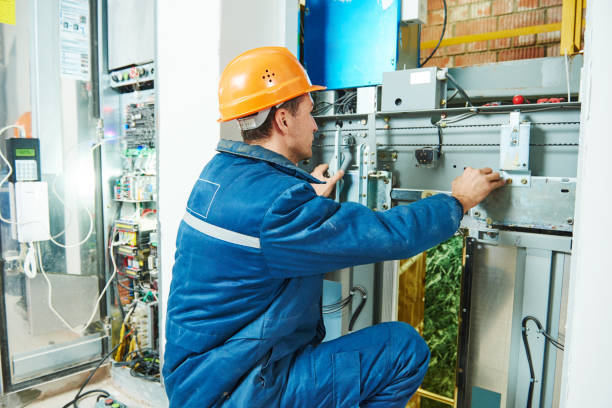

How long do lift repairs take? A transparent guide for FM teams
When a lift stops, disruption starts straight away. Facilities managers need clear answers quickly, not vague estimates.
This guide sets out typical response times, likely repair durations, and the factors that affect quotations so you can plan with confidence.
Altius Lifts provides 24/7/365 breakdown cover across Greater Manchester and the UK. Our engineers focus on rapid diagnosis, clear communication and safe restoration of service with as little disruption as possible.
Emergency call-out vs scheduled repair
- Emergency call-out: This is used for entrapments, passenger safety risks, or critical downtime. We prioritise fast attendance, safe release where needed, and same-day restoration if parts are available or the fault can be adjusted.
- Scheduled repair: This suits non-urgent issues picked up during servicing or inspections. Work is booked at a convenient time, often with parts ordered in advance to reduce time on site.
In both cases, the job starts with diagnosis, safety checks and a clear plan. If parts are needed, you will receive a transparent quotation and realistic timescales, including any lead times.
Typical response and repair durations
Attendance times vary depending on location, traffic, access, and the fault itself. As a general guide:
- Emergency attendance: often within 2 to 4 hours for urgent cases, depending on distance and conditions
- Same-day fixes: common for adjustments, resets, door contact cleaning, and simple component swaps where parts are on the van
- Planned return visit: usually 1 to 3 working days once parts arrive for standard items; longer for specialist components or bespoke controllers
Time on site usually falls into these ranges:
- Minor adjustment or reset: 30 to 90 minutes
- Door operator fine-tuning or contact replacement: 1 - 2 hours
- Safety circuit tracing and component replacement: 1 - 2 hours
- Controller board swap and commissioning: 1 - 2 hours
- Hydraulic issues (oil, valve): 2 to 3 hours, plus testing and temperature checks
These timings are only a guide. Access restrictions, manufacturer design, site conditions, and multiple faults can all extend the job.
Common faults and time-to-fix ranges
Below are broad time ranges for labour, common parts and testing. Final requirements depend on the model, access, and parts availability.
- Door operators and locks: These are a common cause of non-starts. A clean or adjustment is usually quicker. Replacing safety edges, locks, rollers, or door drives adds time.
- Typical time: 1 to 4 hours
- Safety circuits and interlocks: Fault finding can take time, but once the issue is identified, replacing a relay, switch, or safety device is often straightforward.
- Typical time: 1 - 2 hours
- Control boards and drives: Failures here may require OEM or specialist parts, which can mean lead times. Commissioning also needs careful setup.
- Typical time: 1 - 2 hours on site once parts are available
- Hydraulics: Overheat trips, oil condition, valve block issues, and faults are all fairly common. Some are quick to resolve. Others need parts and more testing.
- Typical time: 2 to 3 hours
What affects quotations:
- parts availability and brand-specific pricing
- out-of-hours labour rates for nights, weekends, and bank holidays
- multiple faults uncovered during diagnosis
- access constraints, permissions, or site escorts
- testing and recommissioning time
Parts availability and lead times
Standard fast-moving consumables are often carried on engineer vans or held in local stock. Specialist items such as proprietary control boards, door drives, or obsolete components can take days or even weeks. If a modern equivalent is a sensible option, we will talk you through it so you can weigh up speed, reliability and lifecycle cost.
What a transparent quote should include
A clear quote should cover:
- diagnosis findings and the root cause
- safety status and any immediate risks
- labour time estimate and rate, including any out-of-hours details
- parts list, availability, and lead time
- contingencies or alternatives if supply is constrained
- recommissioning and testing scope
- follow-up recommendations to reduce repeat faults
The aim is simple: no surprises, and enough detail for you to make a clear decision.
How planned maintenance reduces breakdowns
Routine servicing helps prevent many of the faults listed above. Regular cleaning of door tracks, checks on safety devices, monitoring hydraulic oil temperature, and seasonal ventilation reviews can all reduce avoidable stoppages. A structured plan also supports compliance, helps with LOLER documentation, and lowers emergency call-outs over time.
For details on thorough examinations under LOLER, our explainer on lift compliance can help you separate statutory examination from routine servicing and keep records in order.
- Learn more about planned maintenance programmes: lift maintenance services in Greater Manchester
- Read our compliance guide: understanding LOLER and EN 81 expectations
What to expect when our engineer arrives
- Safety first: We secure the area, check for trapped passengers, and make the site safe.
- Diagnosis: We carry out targeted fault finding using test equipment and system logs where available.
- Clear plan: We explain the issue, the options, and the likely timescale. If a safe reset or minor fix is possible, we do it straight away.
- Quotation: If parts are needed, you receive a transparent quote with lead times.
- Prevention: We point out simple steps that may help reduce repeat faults.
Quick playbook if a lift stops
- Keep people safe: Keep users clear of doors and landings.
- Do not self-rescue: Never try to open doors or access the shaft.
- Gather the basics: lift type, address, fault messages, and any unusual noises or smells.
- Call for professional help if the situation is urgent, or arrange a repair visit if it is non-urgent.
If you need rapid attendance and a clear action plan, contact our team for local lift repairs across the region.
FAQs
- How long do lift repairs take? Minor issues are often resolved in 30 to 90 minutes. Door and safety circuit faults typically take 1 to 3 hours. Controller or hydraulic issues can take 2 to 3 hours, plus any parts lead time.
- What is the difference between an emergency call-out and a scheduled repair? Emergency call-outs cover entrapments or critical downtime and prioritise rapid attendance and safe restoration. Scheduled repairs are planned visits for non-urgent faults, often with parts ordered in advance.
- What affects a repair quotation? Labour time, parts availability, brand-specific pricing, out-of-hours timing, access constraints, and testing requirements all play a part.
- What should I do if a lift stops working? Keep users away, do not attempt self-rescue, gather basic fault details, and call for professional support.
Summary and next steps
Lift repair times depend on the fault, the parts needed, and the site itself. Many door and safety issues can be fixed the same day. Controller and hydraulic faults often take longer if parts are required. Planned maintenance helps reduce avoidable failures and supports compliance, which can make budgeting and uptime easier to manage.
For urgent support, call our 24/7 emergency line. For non-urgent faults or to reduce future downtime, request a repair visit or speak to us about a maintenance plan for your building.
Internal links:
- Lift repairs and breakdowns: Get rapid-response support
- Planned maintenance: Dependable servicing for your site
- Compliance guide: LOLER and EN 81 explained